Back to Browse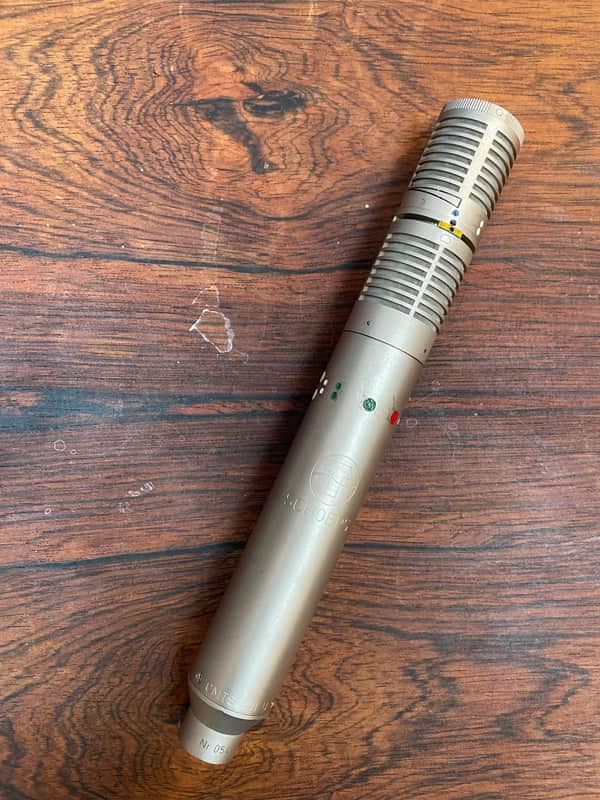
Schoeps CMTS 301 U Stereo microphone 1969-1972 (around that time)
£2,119
Price dropped from £2,126
Very GoodReverb2mo ago
Sold by
K
Kaspar 's Gear Emporium
Details
- First Seen
- 28 September 2026
- Last Seen
- 27 November 2026
- Times Seen
- 65
About this listing
Schoeps CMTS 301 U Stereo microphone 1969-1972 (around that time) is a used item in very good condition, listed on Reverb. The asking price is £2,119. It is offered by Kaspar 's Gear Emporium through Reverb. It is in our Microphones category. Used Gear Hunter first saw this listing on 28 September 2026 and last saw it on 27 November 2026. It has been seen 65 times in our scans. Prices are converted from the seller's currency when we scan the listing, so the amount you pay may differ slightly. The seller sets shipping, and import duty or VAT may apply, so check the final cost and the item's details on Reverb before buying.
From the seller
I am selling this lovely multi pattern vintage mic as I don't record enough with it. It sounds amazing and gives you a lot of possibilities. I used it a lot on acoustic instruments such as piano and guitar and it really just sounds amazing. And this mic is very easy to work with. Comes with PSU and shock mount
Info from an old add:
The SCHOEPS CMTS 301 stereo microphones were optimized for coincident stereo recording. Using a matched pair of specially-adapted three-pattern capsules (Cardioid, Omni, Figure of Eight), they excelled at X/Y, "Blumlein" and M/S stereo techniques.
Much of the direct sound reaches the microphones from significantly off axis when these recording methods are used. Thus their success depends on smooth, uniform frequency response at all angles of sound incidence – a hallmark of SCHOEPS microphones. Large- and/or dual-diaphragm microphones cannot match these qualities.
A particular advantage of single-diaphragm cardioids is their ability to maintain full directivity at low frequencies. Thus they can pick up all the interchannel difference information that is critical for the sense of spaciousness. By contrast, stereo recordings made with coincident dual-diaphragm cardioids tend to collapse into mono at low frequencies.
--------------------------