Back to Browse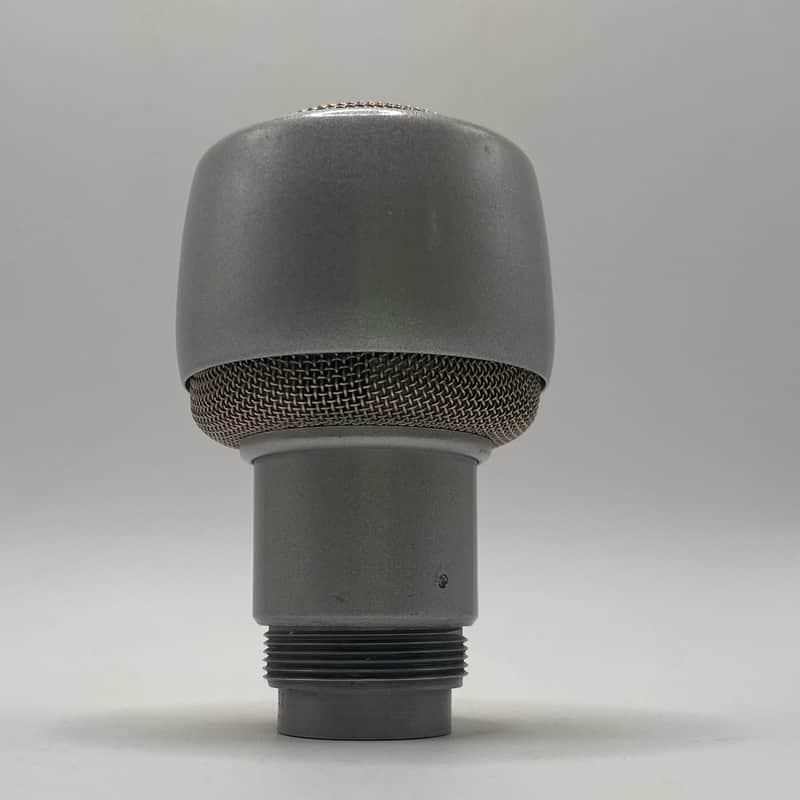
ORIGINAL Sennheiser Labor MD 42 - 1950S GOOSNECK XLR ADAPTER
£156
Price dropped from £157
ExcellentReverb2mo ago
Sold by
M
Micster
Details
- First Seen
- 28 September 2026
- Last Seen
- 27 November 2026
- Times Seen
- 66
About this listing
ORIGINAL Sennheiser Labor MD 42 - 1950S GOOSNECK XLR ADAPTER is a used item in excellent condition, listed on Reverb. The asking price is £156. It is offered by Micster through Reverb. It is in our Microphones category. Used Gear Hunter first saw this listing on 28 September 2026 and last saw it on 27 November 2026. It has been seen 66 times in our scans. Prices are converted from the seller's currency when we scan the listing, so the amount you pay may differ slightly. The seller sets shipping, and import duty or VAT may apply, so check the final cost and the item's details on Reverb before buying.
From the seller
SENNHEISER MD 42 Compact Broadcast Dynamic
The Sennheiser MD 42 is an unusually compact German dynamic microphone developed for professional broadcast and reporting applications.
Its design is immediately distinctive. The microphone body is extremely short, while a series of large rear acoustic vents leaves much of the housing acoustically open.
SERIAL NUMBER
645233
TECHNICAL CONDITION
fully functional, tested and measured
OPTICAL CONDITION
Very good — exceptionally clean overall; no visible manufacturer or model markings
INCLUDED
Sennheiser MD 42 microphone and vintage gooseneck with Tuchel-to-XLR connection
This particular version is especially minimal: no on/off switch, a very short smooth body and a direct large 3-pin Tuchel connection. Other MD 42 versions can be encountered with longer bodies and switching arrangements.
The result is a remarkably compact piece of professional broadcast engineering.
OPEN-BACK ACOUSTIC DESIGN
The rear venting is one of the most interesting aspects of the MD 42.
These openings allow the rear side of the transducer to interact with the external sound field and form part of the acoustic system responsible for the microphone's directional behavior.
In practical use, the MD 42 shows remarkably little proximity effect. Even at very short working distances, the low frequencies do not build up in the exaggerated way commonly associated with many directional microphones.
This makes the MD 42 particularly interesting for close miking, where its tonal balance remains controlled as the microphone is brought close to the source.
Because these rear openings are acoustically functional, they should ideally remain unobstructed during use.
BUILD & DESIGN
The MD 42 is built around a compact all-metal housing with a rounded grille and generously vented rear section.
At only around 7 cm in body length, there is relatively little conventional mounting area. A large microphone clip around the body can also partially obstruct the rear acoustic openings.
For this reason, this example is supplied with a vintage gooseneck mounting solution.
The gooseneck attaches directly at the large Tuchel connection, leaving the microphone body and rear vents unobstructed. It also provides the transition to a modern XLR connection without requiring modification of the microphone itself.
It is a particularly natural way of mounting the MD 42 and the way we would personally choose to use this version.
SOUND
The MD 42 is a remarkably pleasant close-miking microphone.
Its most striking characteristic is the very limited proximity effect. Moving close to the source does not suddenly turn the microphone heavy or excessively bass-rich, allowing very short working distances while retaining a controlled tonal balance.
It also performs particularly well at high sound-pressure levels. The microphone remains composed and retains its basic tonal character rather than becoming noticeably harder or more colored as level increases.
The response is focused through the midrange, with enough presence for good definition while naturally limiting the extreme upper and lower frequencies.
This combination gives the MD 42 a sound that is distinctly vintage without making it difficult to use.
APPLICATION
The combination of compact dimensions, controlled close-distance response and strong behavior at high SPL makes the MD 42 particularly useful beyond its original broadcast role.
It can be an excellent choice for drums, electric guitar, electric piano, percussion and other midrange-focused sources, particularly when the microphone needs to be positioned very close.
The limited proximity effect is especially valuable here: placement can be determined by the desired attack, rejection and physical position rather than by having to compensate for excessive low-frequency buildup.
Its compact dimensions also allow it to fit into positions where a conventional full-length dynamic microphone can become cumbersome.
A SMALL BROADCAST SPECIAL
The MD 42 is a good example of a microphone whose unusual appearance follows directly from its engineering.
Its short body, open rear venting and compact dynamic system create a microphone particularly comfortable at close distances and high levels.
The included vintage gooseneck complements that design particularly well. It keeps the acoustically important rear openings clear, provides practical positioning and brings the original large Tuchel connection to modern XLR without altering the microphone.
Small, robust and acoustically unusual, the Sennheiser MD 42 remains a particularly interesting example of early German broadcast microphone design.