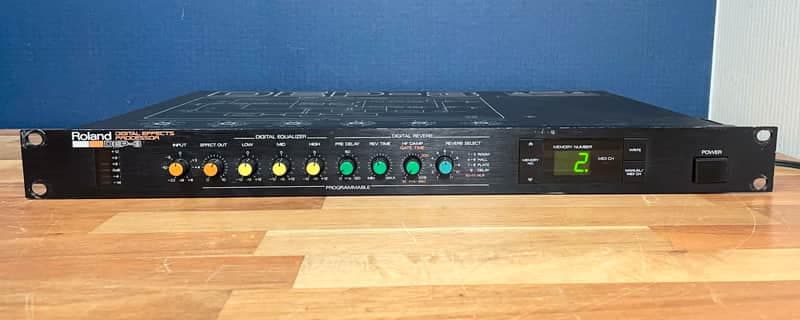
Roland DEP-3 Digital Effects Processor - Black is a used item in very good condition, listed on Reverb. The asking price is £76. It is offered by Plain Store Gear Outlet through Reverb. It is in our Outboard Effects category. 15 similar listings have a median asking price of £132. Used Gear Hunter first saw this listing on 28 September 2026 and last saw it on 20 November 2026. It has been seen 52 times in our scans. Prices are converted from the seller's currency when we scan the listing, so the amount you pay may differ slightly. The seller sets shipping, and import duty or VAT may apply, so check the final cost and the item's details on Reverb before buying.
From the seller
Thank you for visiting my listing page!
This product will show few signs of wear, and has fully tested.
I have posted as many photos as possible, so please check them for details.
Power : 110v / US outlet plug, built-in power cable
Please feel free to contact me if you have any questions.
Delivery time from Japan to US : Around 7 days
We pack an item carefully with Bubble wrap & cardboard.
And don't forget to check out our other cool listings at great prices in our Reverb shop!
the DEP-3 is somewhat cheaper and is designed specifically to create reverb, (including gated and reverse effects) and unmodulated digital delays, with or without regeneration. The user is restricted to one effect at a time. While that may seem fairly unexciting on the face of it, the fact of the matter is that the DEP-3 is probably the cheapest programmable reverb around and it can generate a commendable selection of reverb effects to an impressive standard. It is a 16-bit, mono in, stereo-out system, which results in low noise and negligible distortion, while the bandwidth makes even the delay settings bright enough for higher quality studio applications.
For a programmable reverb unit to be cheap, compromises have to be made, but in this case, Roland have taken all the right decisions and come up with a product that is cost-effective, easy to use and reasonably versatile. How have they done this? For a start they've left out all but the most important variable parameters; the reflection density is not variable, nor is the early reflection spacing or reflection pattern, but the user can choose a basic reverb type, vary the decay time and pre-delay, and in addition there's variable high frequency damping and a three band equalizer, all of which can be incorporated into programs.