Back to Browse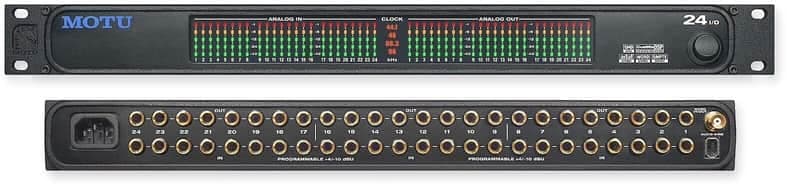
MOTU 24 I/O + MOTU 424 PCI card
£437
Price dropped from £438
ExcellentReverb2mo ago
Sold by
G
Gear Depot
Details
- First Seen
- 28 September 2026
- Last Seen
- 27 November 2026
- Times Seen
- 65
About this listing
MOTU 24 I/O + MOTU 424 PCI card is a used item in excellent condition, listed on Reverb. The asking price is £437. It is offered by Gear Depot through Reverb. It is in our Converters & Interfaces category. Used Gear Hunter first saw this listing on 28 September 2026 and last saw it on 27 November 2026. It has been seen 65 times in our scans. Prices are converted from the seller's currency when we scan the listing, so the amount you pay may differ slightly. The seller sets shipping, and import duty or VAT may apply, so check the final cost and the item's details on Reverb before buying.
From the seller
The MOTU 24I/O audio interface and PCIe card is the solution for those with extensive collections of external hardware and sound modules to finally do away with a mixer and streamline their DAW setups. The MOTU 24I/O provides 24 high-quality, 24-bit/96kHz analog inputs and outputs in a cost effective, single rack space package, allowing you to connect and record from 24 simultaneous analog sources. MOTU fulfills the promise of host-based hard disk recording. You can record, edit, mix process, and master multitrack recording projects entirely inside the computer with a 24I/O.
MOTU 24I/O Core at a Glance:
Audio interface with 24 high quality, 24-bit/96kHz analog inputs and outputs
Control with CueMix
Industry standard word clock sync I/O
Includes cross-platform PCI-424 card for latency-free monitoring
24 Analog Inputs and Outputs
The 24 analog I/Os are pro-grade TRS (balanced/unbalanced) connectors operating at either -10dB or +4dB. The input level can be switched via software in banks of eight inputs. Cuemix provides continuously variable input trim with up to 12dB boost per channel. The 24I/O's front panel serves as a dedicated meter bridge for your hard disk recording system. Audio activity for every I/O is represented by its own five-segment LED bar graph.